
New Year Gift Box Packaging: Corporate Sets, Personalization and Fulfilment
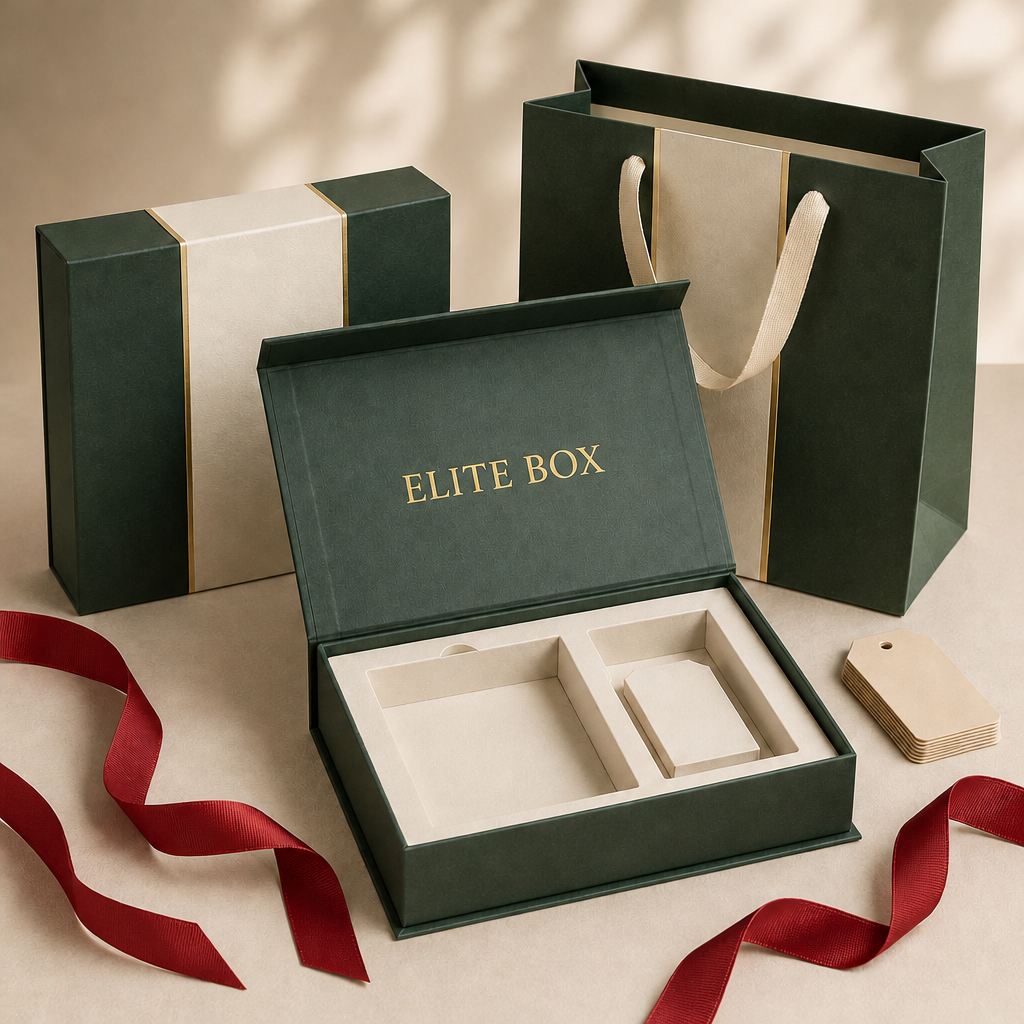
New Year gift packaging for corporate clients, employees, VIPs and retail consumers should be planned as a programme, not just a decorated box. Define the recipient tiers, contents, budget, personalization, quantity and delivery destinations before choosing a structure. This guide covers rigid boxes, inserts, kitting, variable data and distribution planning for the Gregorian New Year; it does not treat the programme as a Chinese New Year factory schedule.
Clarify the New Year gifting programme
Separate clients, employees, VIP recipients and retail shoppers at the start. One standard box may simplify buying, while tiered sets may better match the contents and budget for each group. Record recipient count, address count, gift contents, card format, delivery batches, target markets and required arrival date. This information affects the outer size, insert, packing list, personalization workflow and freight plan. Keep the programme brief separate from any factory-closure calendar.
Choose a structure that suits the gift value
Custom holiday gift boxes provide a broad starting format for a seasonal set. Magnetic rigid boxes suit a clean reveal, while sliding drawer gift boxes can create a staged opening. Compare lid action, contents, storage, shipping layer and reusability before selecting the format. A premium appearance should not make the pack-out unnecessarily large or difficult to distribute.
| Programme choice | Useful structure | Key input |
|---|---|---|
| One curated gift | Magnetic rigid box | Contents, reveal and lid clearance |
| Tiered corporate set | Rigid or drawer format | Tier count, budget and common components |
| Retail seasonal set | Retail-ready rigid box | Shelf view, barcode and pack-out |
| Distributed programme | Presentation box plus shipper | Addresses, batches and destination |
Build gift tiers around a fixed budget
Set the budget by tier and map each tier to its contents, presentation and shipping requirement. Use common components where useful: one card size, one insert family or one outer carton can reduce unnecessary variation. Then identify what changes between tiers, such as the number of items, finish, personalization or delivery method. Include product packaging already around each item. A tier cannot be priced accurately when the content list, quantity, address count or pack-out remains undefined.
Use inserts and kitting to control the pack
Inserts keep a multi-item set aligned and give the packer a repeatable layout. Foam and EVA inserts may suit shaped products, while other insert directions may better match the material brief or presentation. Define the order of contents, card position, QR code location, serial number and any pick-and-pack instruction. Sample the complete set and use a simple packing checklist to reduce missing cards, swapped tiers or incorrectly placed variable items.
Design branding that survives the season
Metallic color, embossing, spot UV and restrained typography can create a New Year direction without locking the box to one short campaign. Put the year, greeting or recipient-specific message on a replaceable card where possible. Keep permanent brand elements on the box and confirm how folds, magnets, drawer fronts and insert edges affect the artwork. Ask for a panel-by-panel artwork map and review small text at the actual printed size before approving the decorated sample.
Plan personalization without slowing fulfilment
Personalization requires a controlled data path. Define the fields—name, greeting, department, address or code—then identify the file owner, proofing step, approval deadline and version rule. Decide whether variable data is printed on a card, sleeve, label or another component. Keep a master list and a packing list aligned, and sample a representative set before production. If a record changes after approval, mark the change clearly rather than allowing an informal message to become the production source.
Sample the complete gift set, not just the box
Review the box, insert, contents, card, variable element and outer shipper together. Check opening order, product visibility, removal clearance, card placement, closing pressure, packer access and shipping orientation. If a liquid, battery or fragrance item is included, identify it in the distribution review and confirm destination requirements with the responsible logistics team. A box-only sample cannot confirm kitting or fulfilment risk. Record approved dimensions, photos, artwork version and open points.
Separate New Year delivery from Chinese New Year factory closures
A Gregorian New Year delivery plan and a Chinese New Year factory-closure plan are related but not identical. The first concerns recipients, addresses, batches and arrival; the second concerns factory availability and production timing. Use the China production holiday calendar when mapping the latter, but confirm the actual programme schedule for the selected structure, quantity and route. Do not use a factory calendar as a delivery promise.
Plan domestic and export distribution
List destinations, delivery batches, address format, outer carton, storage and handoff requirements. If the programme uses DDP or another service, confirm the commercial route and shipment data with the logistics owner; the DDP vs DAP shipping comparison can help frame that conversation. Liquid, battery and fragrance items may require additional destination checks. Keep the presentation box, outer shipper and address label as separate approval points.
Confirm MOQ, unit cost and quote inputs
Provide structure, dimensions, contents, tier count, personalization, quantity, destination, delivery batches, pack-out and artwork status. Include the number of cards, codes or variable records and state which components are supplied by the brand. Review the custom packaging cost guide and custom box unit cost breakdown when separating box, insert, print, kitting and freight assumptions. Then use the request a packaging quote route with confirmed and open inputs clearly labeled.
Supplier checklist before you approve
Confirm these points before release:
- Are recipient tiers, contents, budget and quantities documented?
- Does the structure fit the complete gift set and shipping layer?
- Are insert, card, QR code, serial number and kitting steps mapped?
- Has a complete sample been reviewed with variable data?
- Are destination, delivery batches, address data and outer cartons clear?
- Are artwork version, packing list and acceptance checks controlled?
FAQ
Who should use a New Year corporate gift box programme?
It suits brands sending coordinated gifts to clients, employees, VIPs or partners, as well as retailers planning a seasonal set. The brief should separate recipient tiers and delivery requirements.
How should gift tiers be organized?
Define a fixed budget and content list for each tier, then identify shared components and the changes in insert, finish, personalization and pack-out.
Can names and greetings be personalized?
Yes, when the data fields, file owner, proofing step, approval deadline and production source are defined. Sample the variable component before releasing the full run.
Why sample the full gift set?
The box alone cannot confirm kitting, card position, removal access, closing pressure, packer workflow or outer shipping fit. Review every component together.
Is New Year delivery the same as Chinese New Year production planning?
No. Recipient delivery and factory-closure planning are separate schedules. Map both, then confirm the actual production and distribution plan for the project.