
Christmas Gift Box Packaging: Advent Calendars, Gift Sets and Shipping
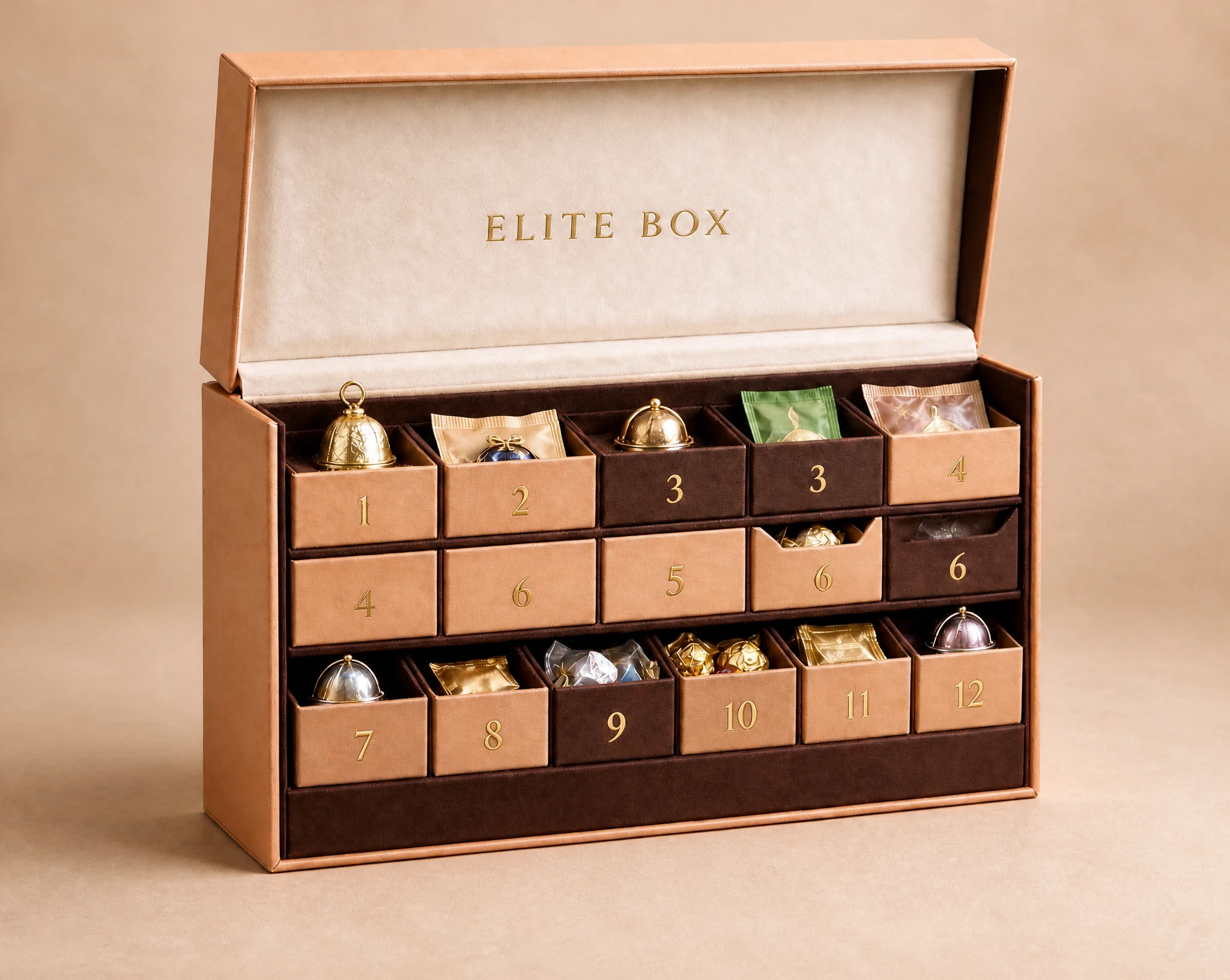
Christmas packaging buyers need to define the pack before selecting a structure. A 24-day calendar, a mixed gift set, a corporate handout and an ecommerce shipment each require different cavities, inserts and outer protection. Start with the recipient, contents, quantity, market, artwork status and arrival window. This guide turns those decisions into a sampling brief while keeping seasonal capacity, intellectual-property risk and freight volume visible.
Define the Christmas pack before choosing a structure
Decide whether the package is a repeated daily reveal, a single gift, a corporate programme or a direct-to-consumer shipment. Count the contents and record each product's dimensions, weight and wrapper. Note whether a card, sleeve or personalization is included. A retail calendar may prioritize front-facing display, while an ecommerce set needs a shipping layer and controlled movement. Put audience, quantity, destination, pack-out and required arrival date at the top of the brief.
Compare advent calendars, cabinets and rigid gift boxes
A 24-drawer Christmas advent calendar box creates a numbered opening sequence. A Christmas advent calendar cabinet can make the display a stronger part of the gift. A custom holiday gift box may be better for a smaller set, while magnetic rigid gift boxes suit a clean reveal. Compare footprint, cavity count, lid or drawer action, storage and outer carton dimensions before approving the format.
| Format | Primary use | Questions to answer |
|---|---|---|
| 24-drawer calendar | Daily reveal and retail display | Drawer count, numbering and filler depth |
| Cabinet | Display-led seasonal presentation | Stability, footprint and shelf view |
| Rigid gift box | Curated or corporate set | Lid, insert, pack-out and shipping layer |
Build a mixed gift set around the recipient
Beauty, chocolate, tea, candles, accessories and corporate items vary in shape and handling needs. Select the assortment around the recipient rather than filling empty cavities with unrelated products. Send dimensions, filled weight, packaging around each item and the intended opening order. Separate food and non-food products in the layout when the brand brief requires it, and identify any liquid, fragrance or fragile item for the packing review. If contents are provisional, label the assumption and sample again after the assortment is finalized.
Design inserts for weight, movement and presentation
The insert needs to hold each item, preserve the reveal and limit unwanted movement. Use layers, dividers, cavities or removable trays according to the assortment. The packaging inserts guide can help structure the review, while a foam, paperboard or other direction should be selected against the actual contents. Check drawer travel, lid clearance, cavity depth, removal access and the weight distribution across the box. A full sample with real or accurate dummy items is more useful than an empty tray.
Use Christmas artwork without IP risk
Red, green, gold, winter textures, foil and embossing can establish a seasonal direction without relying on unlicensed characters, logos or artwork. Ask the brand team to approve the motif, palette, typography and copy before production artwork is released. Keep the logo hierarchy clear and avoid placing small seasonal details where folds or drawer pulls will interrupt them. Record the licensed asset source when a third-party element is necessary, and do not assume that a familiar holiday character is free to use.
Choose retail-ready or ecommerce-ready packing
Retail-ready packaging needs display orientation, consistent master-carton packing and a clear front. Ecommerce-ready packaging needs a shipping layer, corner clearance, controlled movement and an outer label plan. Review the presentation box and the transport pack as two connected but separate components. Rigid box shipping volume optimization can help compare outer dimensions and freight use. If a drop or handling test is required by the buyer, define the method and acceptance criteria instead of implying that a generic box has passed it.
Book seasonal capacity before the holiday rush
Build the programme backward from arrival: brief, dieline, artwork, white sample, decorated sample, approval, production, packing, freight and receiving. Confirm which decisions can change after the sample and which would require a new review. The China production holiday calendar is useful when mapping factory availability, but it is not a fixed delivery promise. State quantity, destination, transport mode, split shipments and the owner of each approval.
Keep sustainability claims specific
Describe only what the project actually specifies: paper wrap, board type, a removable insert, a recyclable component or a named ink system when confirmed. Avoid broad claims such as “eco-friendly” without a defined material and disposal context. Ask how components are separated, whether the insert is removable and what information belongs on the product or pack-out documentation. A specific material brief is more useful for sourcing and review than a general seasonal sustainability slogan.
Confirm MOQ and quote inputs
Provide structure, dimensions, filler list, quantity, market, print, personalization, destination, pack-out and target arrival date. Include the number of drawers or compartments, insert direction, artwork status and whether the set contains food, fragrance, liquid or fragile items. MOQ and unit cost depend on these choices, so separate confirmed details from open assumptions. Use the request a packaging quote route once the complete input sheet is ready.
Supplier checklist before you approve
Confirm the following in writing:
- Are structure, cavity count and opening sequence correct?
- Do all fillers fit with the intended weight and presentation?
- Are artwork assets authorized and placed away from folds and pulls?
- Has the full set been sampled with the insert and outer pack-out?
- Are destination, carton plan, freight assumptions and arrival window visible?
- Is the acceptance standard clear for print, structure and packing?
FAQ
How should a 24-day calendar be arranged?
Start with the actual filler list, then group items by cavity size, weight and opening order. Confirm drawer numbering, pull direction, insert depth and outer pack-out in a full sample.
Can food and beauty products share one gift box?
They can share a presentation box when the assortment, internal separation and brand requirements support it. Review dimensions, packaging, odor and the opening sequence with the actual set.
Is a Christmas gift box suitable for direct shipping?
It may be, but the presentation box should be reviewed together with an outer shipping layer, corner clearance, movement control and destination-specific pack-out.
When should seasonal capacity be locked?
Lock capacity after the structure, quantity, artwork path, sampling sequence, destination and approval owner are clear. The schedule must be confirmed for the specific project.
How is Christmas gift box MOQ calculated?
Structure, size, cavity count, insert, materials, print, finish, personalization and quantity affect the quote. The supplier should review the full brief before confirming MOQ.