
Cosmetic Packaging Supplier Checklist: What Buyers Should Verify
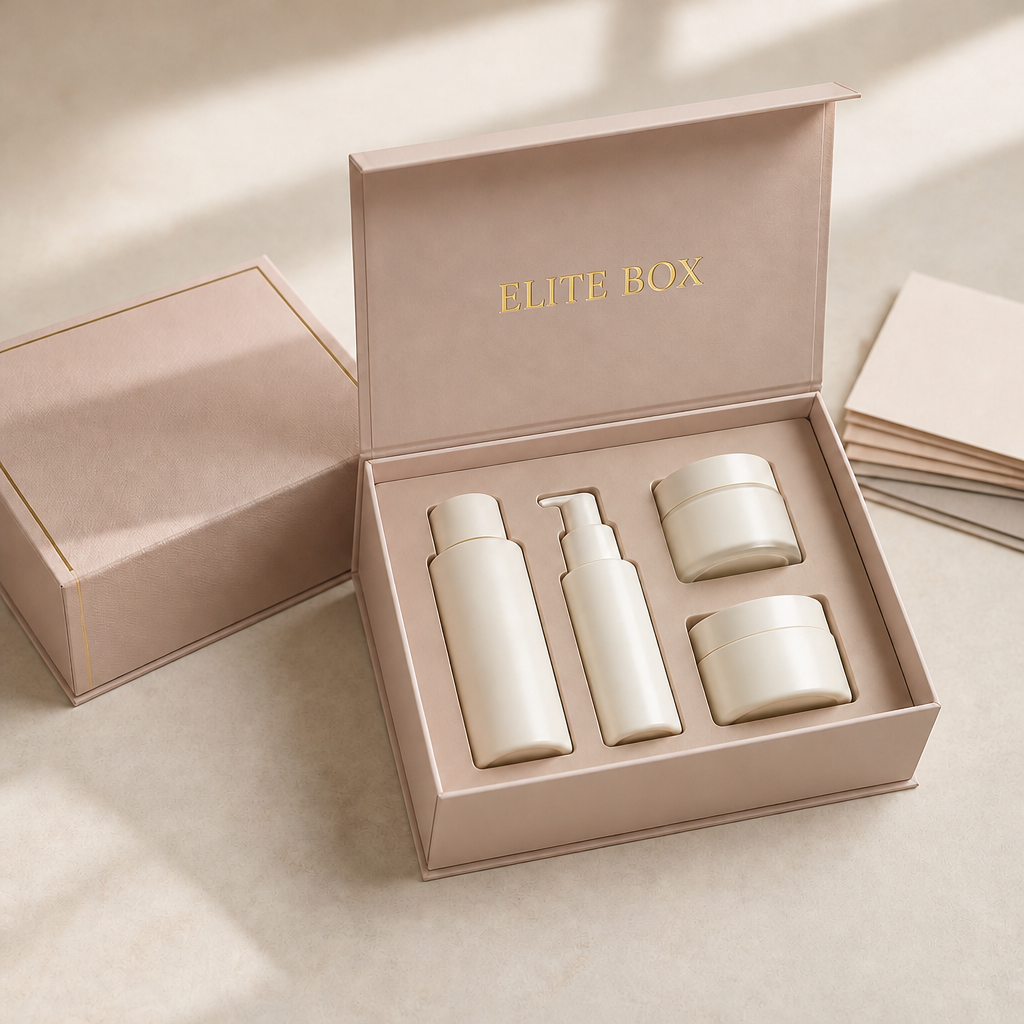
A cosmetic packaging supplier should be evaluated on more than a product gallery or a low unit price. Before ordering, verify the structure, material, fit, printing, insert, sampling process, MOQ, quality documents, shipping terms and communication. This checklist helps buyers compare custom cosmetic box packaging suppliers on the same information and avoid making a decision from incomplete quotes.
1. Confirm the supplier can make the structure
Start with the actual box: magnetic rigid, drawer, lid and base, mailer, folding carton or another format. Ask whether the supplier makes the structure in-house or coordinates it through another facility. Confirm internal dimensions, board, wrap, closure and insert instead of relying on a stock photograph.
The custom cosmetics box page can help define the format. Provide product dimensions, number of units in the set, bottles or jars needing cavities, finish and quantity.
2. Verify product and insert fit
Cosmetics packaging often needs a stable presentation. A bottle, jar, palette or tube should stay in place without the cavity squeezing it. Ask for an insert drawing or sample showing orientation, wall thickness and removal method. If the product changes between batches, measure the largest finished unit.
| Item | Why it matters | Evidence to request |
|---|---|---|
| Internal dimensions | Prevents loose or forced fit | Dimensioned drawing |
| Insert material | Controls protection and presentation | Material description |
| Print and finish | Controls color and brand feel | Artwork proof or sample |
| Closure | Controls opening and transport | Structure sample |
3. Ask for a sampling path
Ask what happens after the first drawing: digital mockup, blank structural sample, printed sample or full pre-production sample. Sampling should answer fit and finish questions before a production order. The work order identifies a typical 5–7 day sample window, but the actual schedule must be confirmed against the structure, materials and artwork.
Ask who approves dimensions, artwork and insert before production. Keep a dated approval record so the quote and sample can be compared with the final specification.
4. Compare MOQ and quantity tiers
MOQ is part of the commercial decision. A cosmetic box project may use a MOQ of 100 pieces on some formats, while a mailer project is noted at 500 pieces and a cylinder project at 300 pieces in the approved facts. Treat these as format-specific planning references, not universal promises. Confirm the MOQ for the exact structure, quantity tier and destination.
5. Review materials and quality documents
Request the material description and project-relevant quality documents. Documents should relate to the actual material, production site and product use. Do not assume FDA, CPSC or another regulatory approval merely because the packaging is intended for cosmetics. If a claim matters to your market, ask what document supports it.
EliteBox Packaging identifies FSC Chain of Custody C153690 and ISO 9001:2015 in its current company information; confirm the relevant document for the quotation and material.
6. Check communication and change control
A reliable supplier should restate dimensions, quantity, finish, insert, destination and approval milestones. Look for clear answers instead of generic “yes” replies. Ask who owns the technical drawing and how changes are logged. If the supplier cannot explain what is included in the quote, the price is not comparable with another supplier’s quote.
7. Compare like-for-like pricing
Compare the same box size, board, paper, printing, finish, insert, quantity, sample, packing method, destination and shipping term. Ask whether the quote includes tooling, sampling, export packing and delivery. DDP can be discussed where relevant, but do not assume it is included until the destination and quotation state it.
8. Inspect the production plan
Ask where the work is produced, how quality is checked and how cartons are packed for delivery. A supplier can be in China without every project having the same production route or lead time. Ask for the actual plan after the sample is approved instead of relying on a generic promise.
Supplier comparison checklist
- Structure and internal dimensions confirmed.
- Product photos, drawings or samples shared.
- Insert material and cavity approved.
- Print, finish and color proof defined.
- MOQ and quantity tier confirmed.
- Quality documents linked to the actual project.
- Sample path and approval owner named.
- Destination, shipping term and delivery plan stated.
Use the custom packaging quote form to send the same specification to a supplier. A clear brief gives you a better comparison than a generic request for a “cosmetic packaging supplier.”
Questions about manufacturing control
Ask where cutting, wrapping, printing and insert production take place. A supplier may use more than one facility, which is not automatically a problem, but the route should be explained. Confirm who owns the drawing, who checks the first sample and who signs off on color or finish. Clear ownership reduces the chance that a small change is missed between quotation and production.
Ask how quality issues are recorded. A useful answer describes incoming material checks, first-piece approval, in-process inspection and final packing checks. You do not need a generic promise of “best quality” you need to know what is checked and when the buyer can review evidence.
Questions about the cosmetic product
Share the primary package and the secondary box requirements. A glass jar, pump bottle, tube and palette can each need a different cavity, wall clearance and removal method. If the product is a set, show the arrangement and identify which components must remain upright. If a lid, dropper or cap can loosen, explain how the insert should support it.
Ask whether the box is presentation-only or expected to provide meaningful transit protection. A luxury rigid box may be placed inside an outer carton for shipping. A mailer may be suitable for a lighter ecommerce pack but require a different insert. The supplier should discuss the role instead of treating one structure as universal.
How to compare a supplier China option
When a search involves a supplier in China, compare evidence rather than country labels. Confirm the legal company name, production location, contact person, material route, sample process and quotation currency. Ask for the same specification from each supplier so a low price is not caused by a thinner board, smaller size or missing insert.
Do not describe a supplier as FDA or CPSC certified without a document that supports the exact product and claim. For cosmetic packaging, a supplier can provide a box structure without providing regulatory approval for the cosmetic product itself. Keep packaging manufacturing evidence separate from the brand's product compliance responsibilities.
Commercial questions before approval
| Question | Why it matters | Record |
|---|---|---|
| MOQ | Determines inventory and unit-cost tier | Format-specific confirmed MOQ |
| Sample | Reveals fit and finish before production | Sample type and timing |
| Shipping | Changes landed cost and delivery plan | Destination-specific terms |
| Changes | Protects the approved specification | Revision and approval owner |
Ask for a quote that separates box, insert, sampling, tooling, packing and shipping where applicable. A cosmetic box project may use a MOQ of 100 pieces on some formats, but confirm the exact structure. The quotation should state whether DDP is available, what destination it covers and which costs remain outside the quoted amount.
Before you approve the order
- Compare the supplier's drawing with the product and insert sample.
- Confirm the approved paper, board, coating, print and finish.
- Record the final quantity, packaging sequence and destination.
- Confirm the sample approval and revision date.
- Keep the quality documents and quotation with the purchase record.
Send a complete brief through the custom packaging quote form. Include product photos, dimensions, quantity, finish, insert expectations and destination. A clear brief allows a supplier to recommend a structure instead of replying with an uncomparable stock price.
Plan the sample workflow
Before requesting a sample, gather the product, insert concept, artwork status, finish preference, quantity and destination in one brief. The packaging sampling workflow guide can help organize the sequence from measurements and drawings to physical review and revision notes. Ask the supplier which sample type answers the main risk first: cavity fit, closure, finish, insert removal or packing sequence.
For insert decisions, compare the cavity drawing with the packaging inserts guide. Check the material description, wall thickness, contact points and removal method against the actual bottle, jar, tube or palette. Keep the approved sample photographs and revision date with the quote. This makes it easier to tell whether a later change affects fit, presentation or the way the box is packed.
FAQ
What should I ask a cosmetic packaging supplier first?
Ask whether the supplier can match the structure, dimensions, materials, finishes, inserts and quantity your product requires.
Should I request a physical sample?
Request a structure or physical sample when fit, insert tolerance, finish or opening experience affects the project.
What quality documents should I review?
Review documents relevant to the actual material and project; do not assume a supplier has a product certification that has not been provided.
How should I compare supplier quotes?
Compare the same dimensions, materials, print coverage, insert, quantity, destination and shipping terms.