
Wine & Spirits Packaging: Rigid Gift Boxes and Bottle Inserts
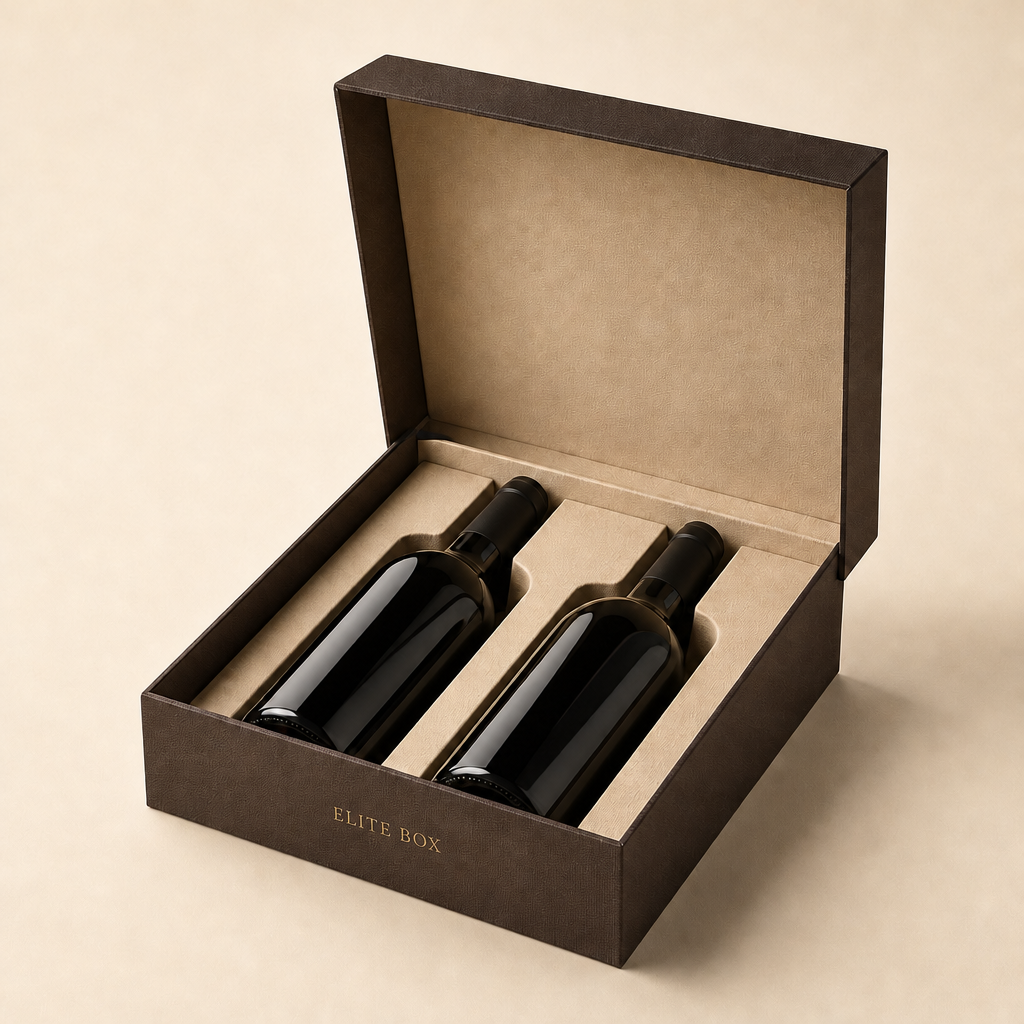
Before quoting wine and spirits packaging, record the bottle dimensions, closure, filled weight, quantity per set, insert direction, finish, artwork status, packing method and destination. A rigid gift box with a fitted bottle cradle can present one bottle, a double set or a mixed configuration, but the structure must be designed around the actual bottle. This guide organizes the choices for wine, whisky, spirits gifts and boutique bottle launches without assuming a standard shape or a universal packing specification.
Measure the bottle before choosing the box
Start with the widest diameter, overall height, shoulder shape and closure type. Add the filled weight, bottle count and any neck or cap projection that changes the internal clearance. A bottle drawing is useful, but the actual bottle is better for sampling because glass, labels and closures can vary within a product family. Record whether the box must hold a single bottle, a pair or a mixed set. These inputs determine the cavity, lid height, insert position and outer dimensions before a supplier can quote accurately.
Rigid gift box or cylinder?
A rigid presentation box suits gift presentation and multi-bottle sets, with space for a structured reveal and a custom insert. A cylinder box suits a single-bottle tube format when the round silhouette and compact opening support the brand. Compare shelf space, protection, opening direction, bottle count and the desired unboxing sequence. The wine and spirits box category is a practical starting point for a fitted presentation, while a cylinder may be the better direction when the product and display require a round package.
| Format | Best starting question | Inputs to confirm |
|---|---|---|
| Rigid gift box | How should the bottle or set be presented? | Opening, bottle count, cavity layout and outer size |
| Cylinder | Does a single-bottle tube suit the shelf and gift use? | Diameter, height, closure clearance and end structure |
| Mixed set | Can each bottle share one stable presentation? | Bottle dimensions, separators, sequence and pack-out |
| Export pack-out | What outer layer protects the presentation box? | Master carton, orientation, destination and handling |
Design the bottle cradle and protective interior
The cradle or insert locates the bottle and controls movement inside the box. Options may include EVA, molded pulp or corrugated board, depending on the required form, presentation and project direction. Specify the bottle body, shoulder and closure separately so the insert does not support the wrong area. The foam and EVA insert category can help compare a fitted support, while a paper-based option may suit a different visual or material brief. Confirm the fit with the actual bottle before approving production.
Plan single, double and mixed configurations
One bottle, two matching bottles and a mixed set each require a different layout. For a single bottle, prioritize centered presentation, removal clearance and a stable base. For a double set, check the space between bottles, divider thickness and how the lid closes over both closures. A mixed configuration needs the dimensions of every bottle and a clear view order. A hypothetical whisky gift set might combine a tall bottle with a shorter companion item; the supplier should receive both profiles and a marked layout rather than a request for a generic two-bottle box.
Select materials, wraps and lining
Discuss the rigid structure, paper wrap, interior lining and insert as one coordinated specification. State the preferred board direction, wrap color, printed areas, lining color and whether the insert should blend with or contrast against the box. Note if the bottle label must remain visible when the lid opens. Share artwork status and any physical color reference early, because print and wrap choices can alter how a dark bottle, metallic closure or textured label is framed.
Match finishes to the brand
Use finishes to make the package recognizable without compromising the product view. Compare foil, embossing, debossing, spot treatment, matte surfaces or printed texture on the selected wrap. Name the exact location: lid, sleeve, spine, interior panel or insert. Link the premium finishes comparison when collecting options from the team. A premium direction can still be restrained; the useful decision is whether the finish helps the bottle, the gift moment and the shelf presentation work as one system.
Sample with the actual bottle
Approve the fit with the actual bottle and closure whenever possible. Check the base, shoulder, neck, cap, label visibility, removal clearance, insert alignment and lid pressure. Ask the supplier to mark any tolerance or open dimension rather than silently adjusting the cavity. If the bottle is not available, use an accurate dummy and identify that limitation in the approval record. The packaging inserts guide can help structure the review notes around support, presentation and removable components.
Plan export packing and freight
The presentation box is not automatically the shipping pack. Provide destination, master-carton plan, bottle count per carton, orientation, storage conditions and the intended handoff to the carrier. Confirm how the rigid box is separated from neighboring units and whether the outer pack-out needs an additional layer. A shipping volume guide can help compare outer dimensions and freight use, but the final packing method must be confirmed for the specific bottle, box and destination.
Separate packaging from labeling compliance
Packaging structure and alcohol labeling are separate workstreams. The brand owner is responsible for the bottle label, market access and any required review for the destination market. A packaging supplier can discuss the box, insert, print and pack-out, but does not provide alcohol-label compliance approval. Keep the commercial packaging brief separate from legal or regulatory advice, and have the brand team confirm its own labeling requirements before final artwork and shipment planning.
Confirm MOQ and quote inputs
The structure, bottle count, insert, materials, print and finish affect the MOQ and quote. Send the widest diameter, height, shoulder shape, closure type, filled weight, quantity, bottle configuration, insert direction, wrap, finish, artwork status, pack-out and destination. If the bottle dimensions or quantity are still open, state that clearly so the supplier can identify what remains to be confirmed. Use the quote form after the physical and commercial inputs are assembled.
Supplier checklist before you approve
Ask the supplier to answer these approval points against the actual project:
- Are bottle dimensions, closure and filled weight recorded?
- Is the box format selected for the bottle count and gift presentation?
- Does the cradle support the body, shoulder and closure without unwanted movement?
- Are materials, wrap, lining, print and finish named separately?
- Has the sample been reviewed with the actual bottle or an accurate dummy?
- Are pack-out, destination, artwork status and open quote assumptions listed?
Keep the approved bottle sample notes, structural drawing, artwork reference and quote together. That record makes later changes easier to isolate.
FAQ
Which bottle dimensions are needed for a custom box?
Record the widest diameter, overall height, shoulder shape, closure type, filled weight and quantity.
Should I choose a rigid box or a cylinder?
A rigid box suits gift presentation and multi-bottle sets. A cylinder suits a single-bottle tube format. Confirm protection, shelf space and unboxing before choosing.
How is a bottle held inside the box?
A fitted cradle or insert in EVA, molded pulp or corrugated board holds the bottle. Confirm the fit with the actual bottle and closure.
What determines wine box MOQ?
The box structure, bottle count, insert, materials, print and finish affect the MOQ. The supplier should quote it after reviewing the bottle dimensions.