
Jewelry Packaging Boxes: Materials, Inserts & MOQ Guide
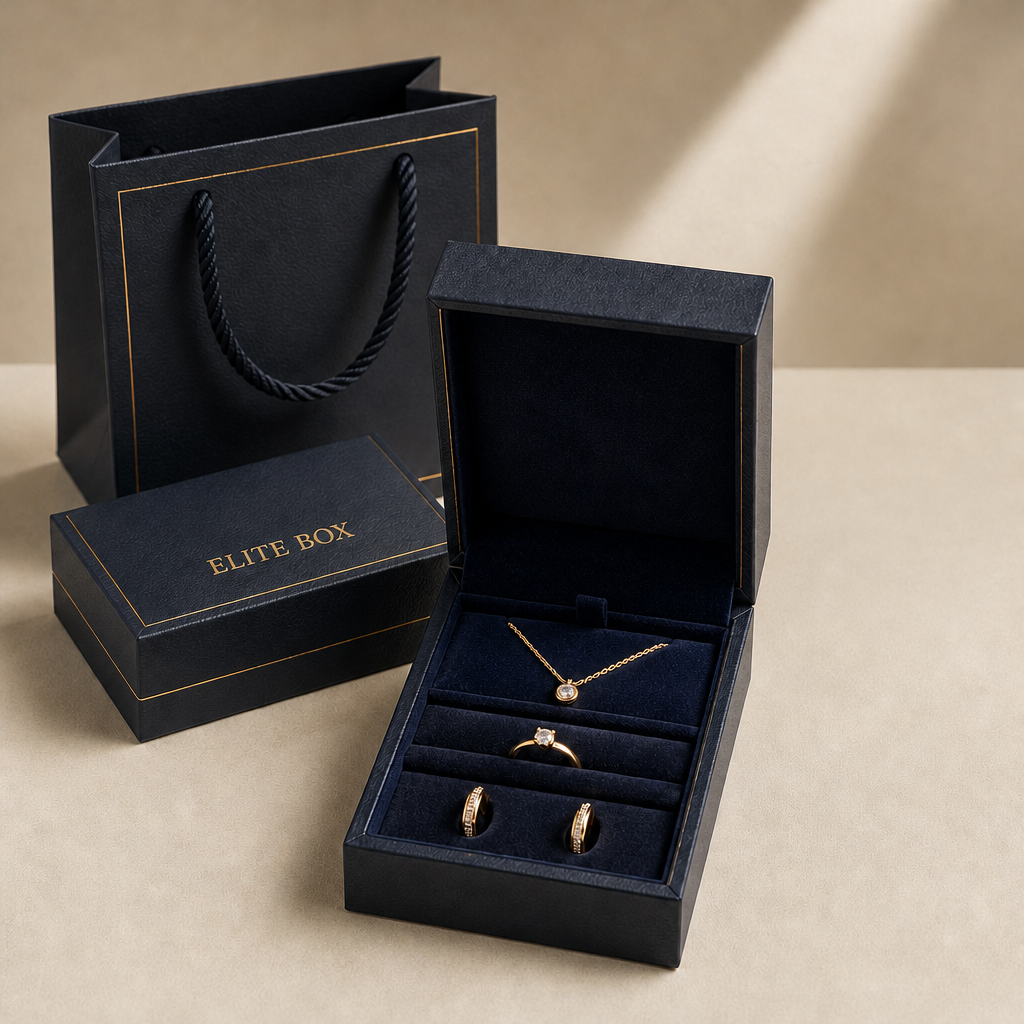
Before requesting a quote for jewelry packaging boxes, prepare the piece dimensions, quantity, preferred structure, insert layout, material direction, finish, artwork status and destination. A rigid presentation box works best when the outside size and the inside support are designed together. This guide explains the purchasing decisions for rings, earrings, necklaces, watches and jewelry gifts, so your supplier can price the right construction instead of guessing from a product photo.
Start with the piece, not the box
List every jewelry format that may use the packaging. A ring needs a slot or cushion, while earrings may need paired positions and a necklace may need a channel that controls the chain. Watches require a larger cavity and a support that holds the product without shifting. Record the widest, tallest and deepest dimensions, plus the quantity per box. If several sizes share one program, identify the largest piece and the combinations that must be presented together. A product reference, dimension drawing and simple placement sketch make the first quote more useful.
Choose a rigid structure that fits the presentation
A rigid presentation box creates a stable platform for a premium unboxing experience. Compare a magnetic rigid box, a hinged lid, a drawer format or another structure according to opening direction, shelf display and gift use. The product page for the jewelry box covers the intended category, while a magnetic rigid box may suit a clean reveal. Decide whether the lid needs a ribbon, a window or a printed interior, and confirm the closed dimensions before artwork is prepared.
| Decision | What to confirm | Why it matters |
|---|---|---|
| Outer structure | Opening, footprint and wall construction | Sets the presentation and shelf use |
| Insert layout | Cavities, slots and removable pieces | Controls fit across jewelry formats |
| Wrap and finish | Paper, color, print and surface treatment | Aligns the box with the brand direction |
| Pack-out | Individual carton, master carton and destination | Clarifies the quote and handling plan |
Design the insert around each piece
The insert is the working part of the package. It should locate the jewelry, show the intended angle and leave room for safe removal. Velvet-lined insert options are available, but velvet is not the only direction; the lining, density and color should be chosen around protection, presentation and cleaning needs. For a mixed set, separate cavities can hold rings, earrings and necklaces in one box. Link the foam and EVA insert category when comparing support options, and specify whether the insert is fixed, removable or layered.
Measure every jewelry format
Use a measurement sheet rather than a general product name. Include ring band width, earring height, pendant length, chain position, watch case size, closure projection and the clearance needed for fingers. Also note whether the item arrives in a pouch or another inner pack. These details affect cavity depth and the visible balance of the set. A hypothetical example is a gift box containing a ring and pendant: the supplier should receive both piece dimensions and a layout showing how the two items are viewed when the lid opens.
Select board, wrap and lining
Discuss the rigid board, paper wrap, lining and insert as one specification. The box size, edge treatment and intended visual weight influence how these components work together. Share the preferred paper color, texture, interior color, logo placement and any reference finish. If the brand has an existing color system, provide the target values and a physical reference when possible. Keep the request practical: material, wrap, insert and print should be stated separately so changes can be priced and approved without confusion.
Match finishes to the price point
Finishes should support the brand rather than obscure the jewelry. Compare foil, embossing, debossing, spot treatment, printed texture or a clean matte surface on a physical sample. Specify where the finish appears: lid top, logo panel, spine, interior or insert. The premium finishes comparison can help organize that discussion. Ask the supplier to show how the chosen finish sits on the selected wrap, because the same artwork can read differently on smooth, textured or dark paper.
Sample the fit before production
A sample should answer fit questions that drawings cannot. Review the largest piece, the smallest cavity, the opening angle, removal clearance, insert alignment and logo position. Use the actual jewelry or a dimensionally accurate dummy when checking the layout. Write comments against named areas and distinguish structural changes from artwork changes. Connect this review with the packaging inserts guide so the supplier receives a single, consistent revision list before the quote is finalized.
Plan retail, e-commerce and gift packing
The same jewelry box may be sold in a boutique, shipped through e-commerce or presented as a gift. Tell the supplier which use case controls the design. Retail may prioritize shelf orientation and a clean front, while e-commerce may require an outer shipping layer and a pack-out that limits movement. Confirm whether the jewelry box sits inside a mailer, a master carton or another protective package. Provide destination, estimated order quantity, packing arrangement and storage constraints so the proposal reflects the complete handoff.
Confirm MOQ and quote inputs
MOQ is not a standalone number. The structure, dimensions, material, insert, print and finish all affect the quote. Send a complete input set: product dimensions, box dimensions if known, quantity, cavity layout, board and wrap direction, lining color, artwork status, packing method and destination. If any item is undecided, label it as an open choice instead of allowing an assumption. The quote form is the right next step after the product and presentation requirements are organized.
Supplier checklist before you approve
Use a short approval checklist and ask the supplier to answer each line in writing:
- Are the outer dimensions and opening structure confirmed?
- Does the insert hold each jewelry format with the intended presentation?
- Are material, wrap, lining, print and finish named separately?
- Has a sample been reviewed with the actual piece or an accurate dummy?
- Are quantity, pack-out, destination and artwork status included in the quote?
- Are MOQ and any open assumptions identified after reviewing dimensions?
Keep the approved sample, artwork reference and quote together. That record reduces ambiguity when a mixed assortment or a later color revision is added.
FAQ
What information do I need before quoting jewelry packaging?
Provide the piece dimensions, quantity, preferred box structure, insert layout, material and finish direction, artwork status and destination.
Should a jewelry insert be velvet?
Velvet is one option. Choose the lining for protection, presentation and cleaning needs, then confirm the material and color with a sample.
Can one box hold rings, earrings and necklaces?
Yes, if the insert is designed with separate cavities. Confirm the layout with the largest piece and approve a physical sample.
What determines jewelry box MOQ?
The structure, size, material, insert, print and finish affect the MOQ. The supplier should quote it after reviewing the product dimensions.